

The right kind of healthy diet can affect a person’s brain at every stage of their life. For years, research primarily went towards the nutrients needed for developing brains in youth, but we now know that diet and your brain health are linked throughout life.
A lot of recent studies have delved into dietary approaches to stopping or slowing cognitive decline and improving brain function in people who may be facing that decline. It turns out that most of those foods benefit you at any point in your life, in a wide variety of ways.
Researchers use the word “neuroprotective” to talk about interventions that help protect brain cells. Research into diet and brain health consistently shows the same groups of foods containing these neuroprotective elements. Here are some of the most important foods for protecting and improving brain health.
Green, leafy vegetables and cruciferous vegetables
There are two big kinds of green vegetables that can benefit your health in many ways, including your brain health. One is called cruciferous vegetables. This huge family of cultivars includes broccoli, brussels sprouts, cabbage, cauliflower, and kale.
One of their many health benefits is an association with slower cognitive decline in people who are aging. Research indicates that a phytochemical called sulforaphane might be the reason. “Phytochemicals” are just any chemical that naturally occurs in plants that can have an effect on the body.
The other big family of brain health veggies is leafy greens. Leafy greens have nutrients, like folate, nitrate, lutein, and more, that are each associated with positive effects on cognitive function.
Both kinds of green vegetable can affect your brain health in positive ways, and it’s smart to try and get them in at least once a day.
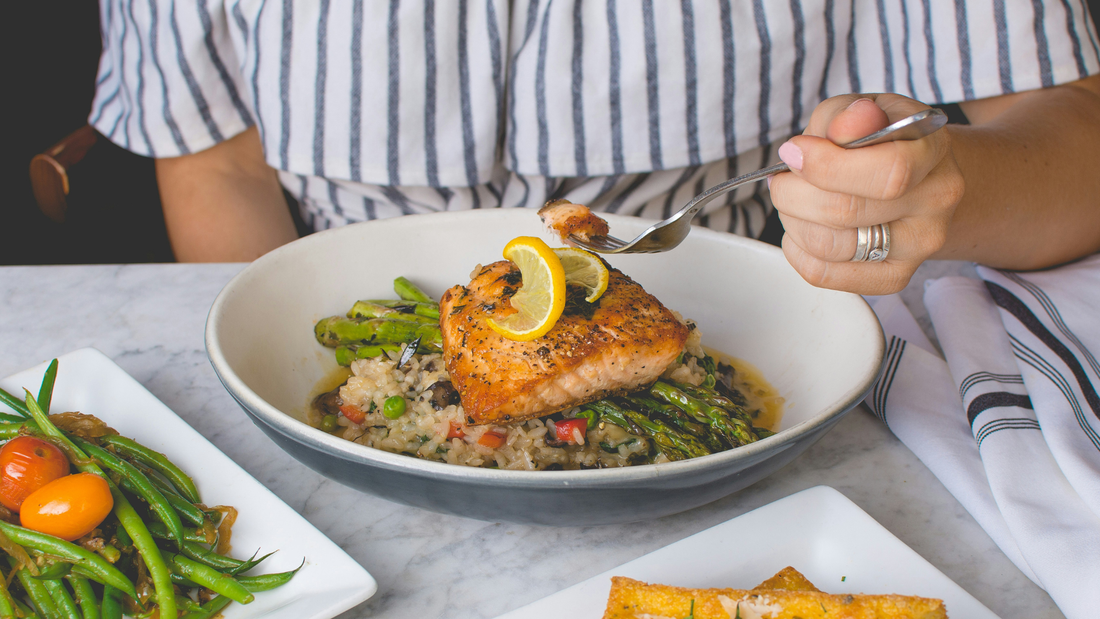
Fatty fish, like salmon
A lot of old-fashioned dietary wisdom tells people to avoid fats. But certain kinds of healthy fats are very important! Research indicates that about 50-60% of the brain’s makeup is lipids, or fats. About a third of that is omega-3 fatty acids.
Omega-3s appear to promote cognition and protect your neurons from degenerating. Some fatty fish, like salmon, are rich in omega-3s. Other good fish to consider are sardines, trout, tuna, and mackerel.
Beans
Beans and legumes have been associated with preventing cognitive decline in aging populations in research. High consumption of legumes, at least three times a week, was associated with better cognitive health in one Italian study.
But critically, beans are also a great source of plant-based protein, and a strong alternative to red meat. Red meat, especially processed red meat, has been associated in research with cognitive decline as people get older. Getting more beans and less red meat is a great double-fisted approach to protecting your cognitive health.

Berries
Plenty of fruits and vegetables are helpful for memory, but alongside leafy greens, berries are among the most helpful. Strawberries, blackberries, blueberries, and more are rich in flavonoids. Flavonoids are antioxidants, which are important to brain health as we get older.
Antioxidants reduce the number of free radicals in the brain. Free radicals cause oxidative stress in the body, and oxidative stress can cause inflammation. This matters because inflammation seems very closely tied to declining brain function as we get older.
You can also find flavonoids in dark chocolate and wine, but it’s best to enjoy those foods in moderation, compared to the berries.
The MIND diet
Two separate diets have been observed to help with staving off the mental effects of aging. One is the Mediterranean diet, and another is the blood pressure-focused DASH (Dietary Approaches to Stop Hypertension) diet. These diets have been studied for metabolic and cardiovascular health benefits.
They both appear to help with cognitive health and memory as well, so, recently, researchers have combined these diets into one. They call it “MIND,” or the Mediterranean-Dash Diet Intervention for Neurodegenerative Delay. Research seems to indicate that the MIND diet is the best diet for brain health studied so far.
Researchers built a scoring system for translating how much a person's diet gave them the neuroprotective benefits seen in the MIND diet. Over the next 4.7 years, they measured this "MIND diet score" and change in cognition among 960 participants of the Memory and Aging Project.
They found that the higher the MIND diet score, the better off participants were in terms of memory. When they compared the top-scoring third of participants to the bottom-scoring third, the difference was sharp. The top scorers were so much more mentally sharp that it was equivalent to them being 7.5 years younger than those who scored in the bottom third.
A lot of research and care went into the MIND diet. It recommends certain brain-boosting foods to be sure to include, as well as foods to limit.
Every week, eat at least
- Three servings of whole grains per day
- Six servings of leafy green vegetables
- One serving of vegetables per day in addition to any leafy greens
- Two servings of berries
- Five servings of nuts for snacks
- Four meals of beans
- Two servings of skinless, white meat poultry
- One serving of non-fried fatty fish
There are also some foods to limit
- Less than five servings per week of pastries and sweets
- Less than four servings per week of red meat
- Cheese and fried or fast food no more than once per week
- No more than one tablespoon per day of butter or margarine
- When you needed to add fat for cooking, try to use olive oil
Generally, speaking, the average plate on the MIND diet will be 25% a healthy protein, 25% whole grains, and 50% dark-colored fruits and vegetables.
There are also things to avoid on the MIND diet: typically foods higher in saturated fat, trans fat (which were banned in the US in 2018), and added sugar. You should limit pastries, sweets, and other processed foods as well as red meat, cheese and fried foods, and butter/margarine.
It’s also worth noting that some of these limitations aren’t that severe. While red meat should be limited to four times a week, that’s still more than half of the days of the week. While there’s definitely a reduced emphasis on red meat (depending on the culture you’re coming from), there’s no need to cut it out entirely on the MIND diet.
The best diet for brain health
Generally speaking, the MIND diet is recognized as the best diet for brain health. But even if you’re not following it to the letter, people focused on maximizing their mental acuity can keep these general principles in mind:
- Focus on plant-based, antioxidant-rich foods
- When you eat meat, favor fatty fish and poultry
- Avoid saturated fats and added sugars
The MIND diet is great at helping you get nutrient-rich, filling meals, but having a handle on the basic principles is important, too.
If you’re concerned with keeping your mind sharp as you get older, there’s plenty you can do. From getting enough sleep to exercising, from focusing on your diet to incorporating supplements and even probiotics, there are plenty of ways to maintain your cognitive health.
With so many ways to approach brain health, there’s sure to be at least one that you can fit into your daily life. Find it, try it, and see how much better you feel.