

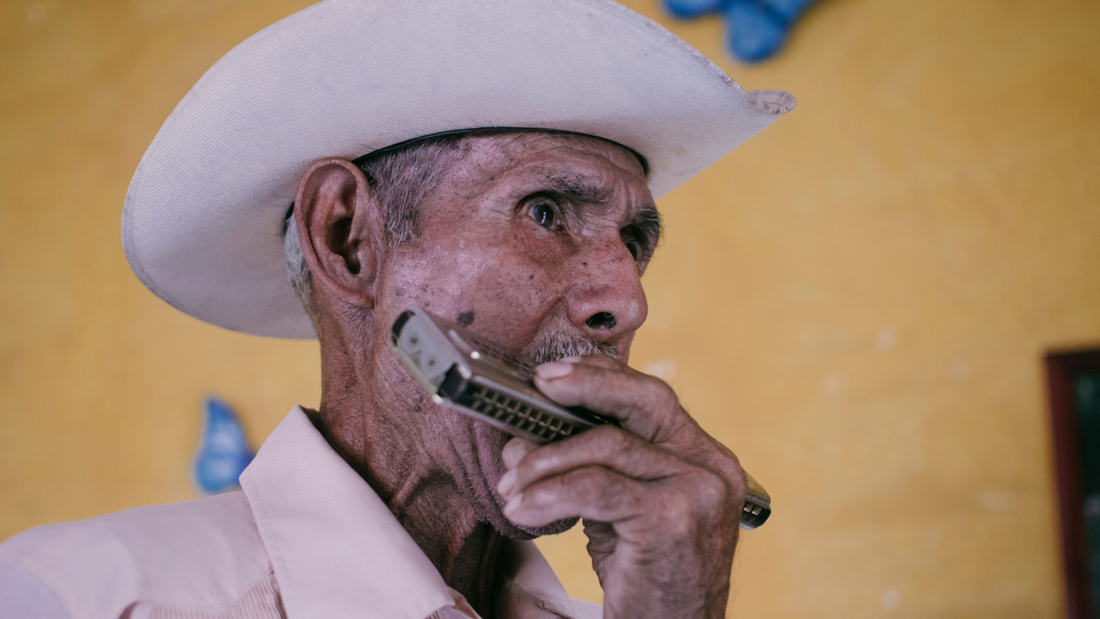
In Oahu, Hawai’i, a small but growing movement is adding to the tools people with Parkinson’s disease use to tackle their motor issues, especially ones related to speech. Physical therapist and harmonica player Kevin Lockette has been teaching classes, in person and online, specifically for people with PD and their loved ones through The Harmonica Parkinson’s Project.
The benefits of harmonica for PD
While other musicians with PD have spoken anecdotally about the harmonica helping them with dysphagia, Lockette and his colleagues have put in the work to demonstrate it in a pilot study. In a study of 22 people, half took harmonica classes, while half took traditional speech therapy. After taking 24 harmonica lessons over 3 months, harmonica group members improved in some key areas, such as
- speech intensity
- speech intelligibility.
They also scored significantly better in certain UPDRS test measures, like
- speech
- swallowing
- facial expression
Ideally, future research would be conducted with larger groups of participants and published in a peer-reviewed journal. But the results of this pilot study are a promising start.
Getting started with harmonica for Parkinson’s
You don’t have to travel to Oahu to participate in these specialized harmonica classes. They hold free lessons on the second and fourth Tuesday of every month, at 4pm Hawai’i time. If that time doesn’t work for you, there are other options. There are videos available on YouTube, including traditional instructional videos, but also a playlist of previous Zoom classes. For the most up-to-date info, their Facebook page seems to be the best resource for upcoming lessons.
Finding your people
In addition to the physical benefits of harmonica for PD, there’s also the social benefit of getting together to work towards a shared goal with people who understand what you’re going through.
A recent Washington Post article focuses in depth on the social aspect through the eyes of participant Neal Tomita and his wife, Cheryl Lippman. They talk at length not only about the recovery of his speech, but about how happy Tomita has been to get to share time and space with people who genuinely understand his struggles with PD.
This aligns with what people have said about Dance for PD, a similar program of dance classes geared towards people living with Parkinson’s. Dance for PD is established and well-studied, and in addition to the motor benefits and cognitive improvements of long-term dance practice in people with PD, research participants have frequently reported social and emotional benefits, as well.
Other music therapy for Parkinson’s
Lockette is quick to point out the overlap in the physical skills used in his work with Parkinson’s patients and with playing the harmonica. According to him, both involve pitch, intonation, saliva management, and more.
But choosing an instrument is an important and personal process, and if you aren’t drawn to harmonica, there are other musical opportunities out there that can still provide benefits to people living with PD. A large-scale review of studies from 2015-2020 on music therapy and Parkinson’s disease indicates that there are many benefits to many kinds of music therapy.
Some of these studies found physical benefits in music therapy, including improved motor functions, balance, gait, and more. Other studies found that singing in particular was beneficial for breath, phonation, speech, and other aspects of communication.
Still more studies found social and emotional improvements. People who engaged in music, especially with others, experienced benefits related to mood, quality of life, focus, and more. And while cognitive benefits weren’t as widely studied as other areas of improvement, the studies that did show up were promising.
Keeping up with physical therapy can be challenging. Maintaining the discipline that it takes to keep up with exercises can be physically draining, and putting so much effort in just to maintain your current level of proficiency can be emotionally draining.
One of the many benefits of music therapy is that it allows you to get some of these benefits in a more lighthearted way as you learn a new skill, find community, and strengthen speech skills in a setting that’s fun.

Making room in your life for music
Everyone engages with music differently, but the benefits of doing so are clear, especially for people with PD. There are many options out there, including opportunities like The Harmonica Parkinson’s Project, where people combine their passion for music with their expertise around Parkinson’s disease.
Music engages your body and your mind, and playing in a group demands that you pay deep attention to your surroundings. It’s an intense art form, and a rewarding one.
If you choose to pursue music as a way of helping deal with your Parkinson’s, we’d love to hear about it, and to help you share your story, too! How is music a part of your life, and what have you enjoyed about it?
Recommended reading:
A Microbiome Researcher on Parkinson’s and Probiotics
Parkinson’s: Foods to Eat and Avoid
Your First Month Taking Neuralli MP - What to Expect
Go --> All Parkinson's articles