

By Rose Lauren, Bened Life Neurodiversity & Disability Specialist
⚠️ Content Note: This blog talks openly about self-harm, suicide, and related struggles. If you are in the U.S. and need support, you can dial or text 988 for the Suicide & Crisis Lifeline. International readers can find hotlines at https://findahelpline.com. Please prioritize your safety and well-being while reading. This blog is for informational purposes only, and does not constitute medical advice as you would receive from your doctor.
One of the topics that’s been coming up a lot recently in neurodiversity spaces is stimming (self-stimulation) and SIB (self-injurious behaviour). These two things often get confused with each other, or worse, lumped together, which can cause a lot of misunderstanding and shame.
I want to write about this because both are a big part of my life and history, and I know I’m not the only one.
What is stimming in autism?
In neurodiversity, self-stimulation (or stimming) refers to repetitive, purposeful movements, sounds, or behaviors that neurodivergent individuals use to regulate emotions, manage sensory input, and cope with anxiety or stress. I would like to add that this isn’t always technically a conscious thing, although it is autonomic. Meaning, a lot of self-stimulation is done absentmindedly.
Stimming includes body movements like hand-flapping, rocking, humming, fidgeting, or repeating phrases. Although these are the ‘main’ ones, there are SO many ways we self-stimulate beyond these examples, which I go into further into this write. Sometimes it’s about joy and expression; other times it’s about calming down or balancing sensory overload. For me it’s all of those things and arguably a dopamine source for me too.
The important thing to know is that stimming is natural, healthy, and necessary for many Autistic and ADHD people. Suppressing the desire to stim because of social pressure means there is no way to escape the sensory overload that it would have released (read more here).
What is self-injurious behaviour (SIB)?
Self-Injurious Behaviour (SIB) refers to self-directed actions that result in physical injury: things like head banging/hitting, skin picking, burning, and/or hand biting.
It’s not just "stimming taken too far.” It’s usually a reaction to overwhelm, frustration, communication breakdown, or sensory/emotional overload.
SIB isn’t a trait of autism itself, but it is very common across the spectrum. It often looks different depending on a person’s support needs and life circumstances.
For example, people who mask heavily or are undiagnosed may experience SIB in private, where it can go unseen—and they may feel too ashamed to talk about it. On the other hand, clinicians and caregivers often see very high rates of SIB among nonspeaking Autistic people or those with higher support needs.
In all cases, it’s misunderstood. SIB is too often dismissed as ‘attention seeking’ or ‘bad behavior,’ when in reality it’s a signal of crisis and a need for support, not shame.
My lived experience
I was diagnosed with ADHD in my early teens, but before I was finally diagnosed Autistic in my early 20s, I got hit with all kinds of other misdiagnoses: borderline (BPD), bipolar, even histrionic personality disorder - whatever THAT is. I was placed on medications, admitted multiple times, and through all of this I was self-harming from a really young age. I know now how common this experience of misdiagnosis is, and give grace to those who were simply doing what they could with the knowledge we had at that time.
Before I was even 10 years old, I was already hurting myself. I recall holding my breath or strangling myself of oxygen when I felt SO overcome with a rage that I didn’t know what to do with. This sadly became a behavior I still carry, as I notably stop breathing when I feel intensely negative emotion, and instead of crying naturally have to be TOLD to breathe and let it out.
I attempted overdoses at 11, 16, 17, 19, 21 and 22. I’ve got scars all over my arms and legs, although I have a beautifully done sleeve tattoo that covers the worst of them. I used to rage out, smash my head against walls, burn myself, cut my arms and thighs with razors, take scalding hot or freezing cold showers, and lash out at things around me (I once broke a toilet seat in a Paris hotel in a meltdown — it shattered, and I cut myself with the pieces).*
That’s the SIB side. It’s something I now, at 32 and informed, do not engage in nearly as much. I would say now that I understand and have support, my worst reaction is that I do still hit my head with my hand in a fit of anger against myself, but this is extremely rare.
It’s worth noting that if an Autistic person or child is non-speaking, or dealing with other learning/developmental disorders, they may not have the tools to express this overwhelm. They may not even understand it themselves. That’s why it is so important that their families and peers and carers understand and know what to do when this occurs.
I’ve always stimmed too. Since I was a kid, I’ve bitten my lip constantly. I smoked and vaped for years partly because it filled that constant compulsion to do something. I shake my leg all the time, play with my hair, fiddle with my glasses, stroke my own arms, or rock gently when I’m overwhelmed. I need multiple drinks around me to replace that oral/sensory need that smoking filled.
Here’s the thing: one set of behaviours (SIB) comes from distress and overload. The other (stimming) is about regulation and balance. Knowing the difference is literally life-saving.
Stimming vs. SIB: why the distinction matters
The difference between stimming and self-harm is important because each behavior needs a different response.
-
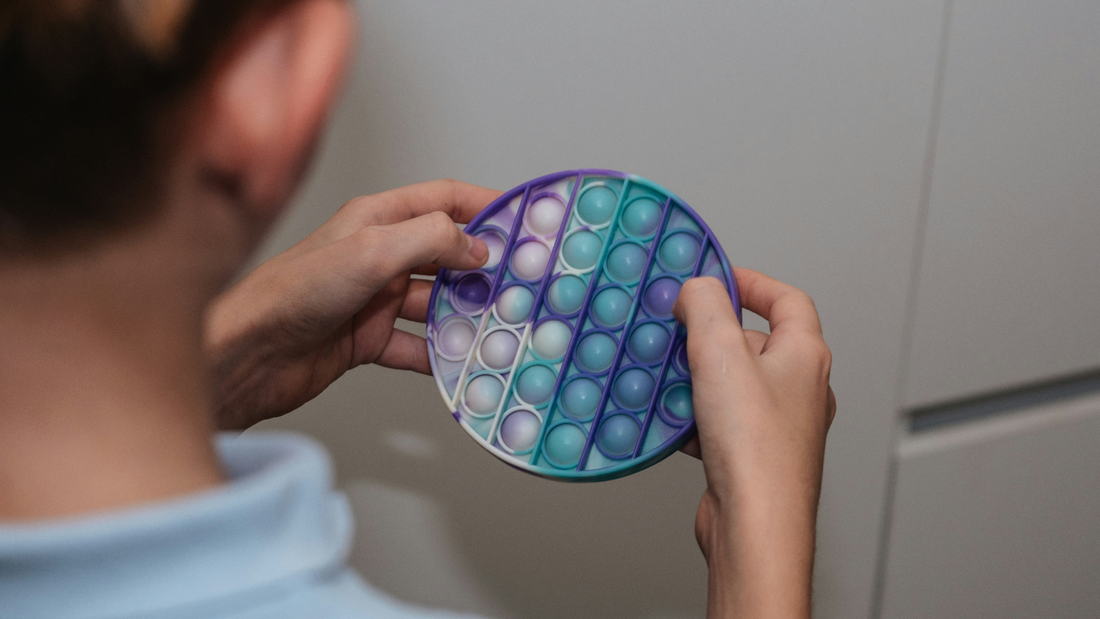
Stimming = allow, support, normalize. It’s not “weird,” it’s necessary. Give them/yourself tools or toys to help.
-
SIB = compassion & support, not punishment. It’s a desperate cry for help, not “bad behaviour.” How people react to SIB can result in either helping or exacerbating the underlying problem.
-
Both = zero shame. Autistic and ADHD people deserve understanding, not blame, for how we cope with the world.
When people confuse stimming with SIB, it leads to more stigma, suppression, and harm. When people understand the difference, they can actually help.
Practical Strategies
Supporting Stimming
- Normalize it in public — don’t shame others for stimming behaviors like body rocking, flapping, or humming.
- For those who need strong sensory input: try weighted items, chewelry, strong flavors, textures, crunching ice, and/or stim toys with resistance.
- If you need to stim discreetly: small fidgets, leg bouncing, or quiet sensory tools can help in “unsafe” environments. I usually play with the hem of my shirt or make shapes with my fingers.
Supporting SIB
- Learn to notice early warning signs: clenched jaw, agitation, escalating fidgeting, sensory overload, vocalising distress.
- Swap harmful urges for intense but safe alternatives: ice cubes, snapping elastic, scribbling hard on paper, stomping, screaming into a pillow, or even hitting the pillow if that helps.
- Create a “crisis kit”: headphones, sunglasses, stim toys, grounding tools, a safe space if possible.
-
Aftercare matters: if SIB happens, treat injuries, be kind to yourself and/or them, and reflect later when calm — without shame.
Closing Thoughts
Stimming and SIB aren’t the same thing. One is a natural, healthy regulation tool. The other is a distress signal that deserves compassion and support.
Both are part of many Autistic lives — mine included. Both deserve to be understood.
The more we separate myth from reality, the more we can reduce shame, create safety, and actually support neurodivergent people in the ways we need.
About the author:
Rose Lauren is a British AuDHD writer living in Belgium, who also has cPTSD & physical disabilities. Follower her on Instagram at @rose.llauren.



1 comment
As a dad with a young adult daughter with ASD and a Family Medicine doctor caring for patients with ADHD and ASD I found this article so very useful. I’m thankful to Rose Lauren for sharing her experiences and knowledge on this important subject.